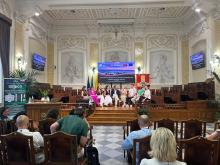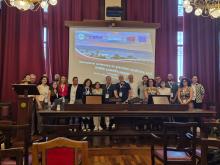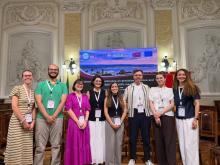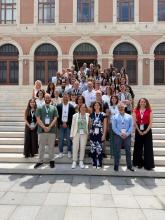
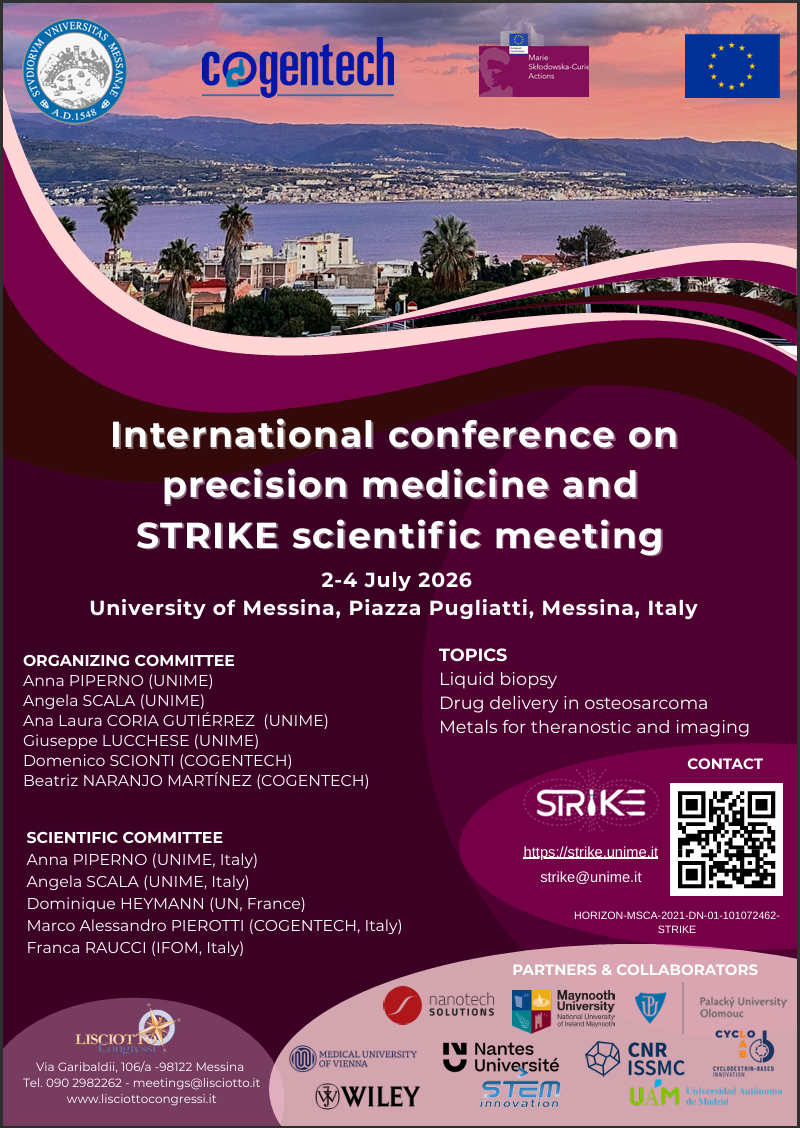
The International Conference on Precision Medicine and the STRIKE Scientific Meeting took place from 2 to 4 July 2026 at the University of Messina. Jointly organised by the University of Messina and COGENTECH, both partner institutions of the STRIKE Marie Skłodowska-Curie Doctoral Network, the event brought together researchers, clinicians, industry experts, and early-stage researchers from across Europe and beyond for three days of scientific exchange and collaboration.
The conference served both as the final consortium meeting of the STRIKE project and as an international forum dedicated to emerging developments in precision medicine, nanotherapeutics, liquid biopsy, cancer diagnostics, and translational oncology. Alongside the presentation of recent scientific advances, participants reflected on the progress achieved throughout the project, the collaborations fostered within the network, and the lasting impact of its research and training activities.
The meeting opened on 2 July with the keynote session “STRIKE Project: Past, Present, and Future”, delivered by the project coordinator, Prof. Anna Piperno. Throughout the programme, internationally recognised speakers addressed major challenges and innovations in oncology and biomedical research, including liquid biopsy technologies, immune reprogramming strategies, osteosarcoma therapeutics, drug delivery systems, and the growing role of artificial intelligence in academic research and scholarly publishing. Invited speakers included Prof. Marco Alessandro Pierotti of COGENTECH, Prof. Dominique Heymann of Nantes Université, Prof. Magdalena Król of the Warsaw University of Life Sciences, Prof. Federica Carnamucio of Virginia Commonwealth University, and Dr Francesca Novara of Wiley.
Scientific sessions on 3 July highlighted translational and interdisciplinary approaches in nanomedicine and cancer therapy. Doctoral candidates and early-stage researchers from partner institutions across the STRIKE network presented their latest work on magnetic nanoplatforms, targeted drug delivery, osteosarcoma models, radiolabelling, advanced molecular profiling techniques, and more. Their contributions highlighted both the scientific progress achieved during the project and the network’s international, interdisciplinary, and intersectoral character.
The conference also highlighted the strong collaborative spirit of the STRIKE consortium, which has connected universities, research institutes, clinical centres, and industry partners across Europe. By promoting knowledge exchange across fields ranging from chemistry and materials science to oncology, imaging, molecular biology, and biomedical engineering, the network has established a solid foundation for future cooperation.
The event concluded on 4 July with a social gathering celebrating the achievements of the STRIKE network and strengthening ties for collaborations extending beyond the project’s lifetime. The full programme featured keynote lectures, oral communications, networking sessions, and consortium discussions devoted to future research directions and long-term scientific impact.
Photo Gallery